
The Real Cost of Poor Payroll Management in Hospitality
Updated May 2026 · 11 min read · Evisory Hospitality Advisory

Master payroll compliance and rostering efficiency to protect your hospitality venue from hidden wage leaks and legal exposure.
Most hospitality operators know payroll is their biggest cost. Fewer realise how much of that cost is entirely within their control — and how much is silently leaking out through poor rostering, miscalculated penalty rates, incorrect award classifications, and reactive scheduling habits built up over years.
In 2026, the stakes around payroll management in Australian hospitality have never been higher. Intentional underpayment of wages became a criminal offence on 1 January 2025, carrying penalties of up to $7.8 million in fines or 10 years imprisonment for individuals. And the Fair Work Ombudsman recovered a record $358 million for over 249,000 underpaid workers in 2024–25 — with fast food, restaurants, and cafés named as a continuing enforcement priority for 2025–26.
This isn't just a compliance issue. It's a financial management issue. Poor payroll management costs hospitality businesses money in two directions simultaneously: overpaying through inefficient rostering, and underpaying through award misinterpretation — both of which carry serious consequences.
Payroll problems in hospitality almost never start with bad intent. They start with complexity — casual loadings, penalty rates, overtime calculations, split shifts, public holiday rules — stacked on top of operational pressure and limited admin time. The result is a system held together with habit and approximation, and that's where the exposure is.
The two-sided cost of payroll mismanagement
It's worth separating the two distinct ways payroll goes wrong in hospitality, because the solutions are different.

Good rostering protects both compliance and profitability.
The overpayment problem is about rostering inefficiency. Too many staff on slow shifts, overtime costs that weren't planned for, labour scheduled by habit rather than by forecasted revenue. This drives up your wage cost percentage and directly compresses margin — quietly, week by week, without any single moment of obvious failure.
The underpayment problem is about award non-compliance. Penalty rates missed, casual loadings not applied correctly, employees misclassified at the wrong level, flat rates used that don't actually cover entitlements. This creates legal and financial exposure that can surface years after the fact — the Fair Work Ombudsman can pursue underpayments going back up to six years.
Both are expensive. Both are common. And both tend to get worse the longer they go unaddressed.
What the compliance landscape looks like right now
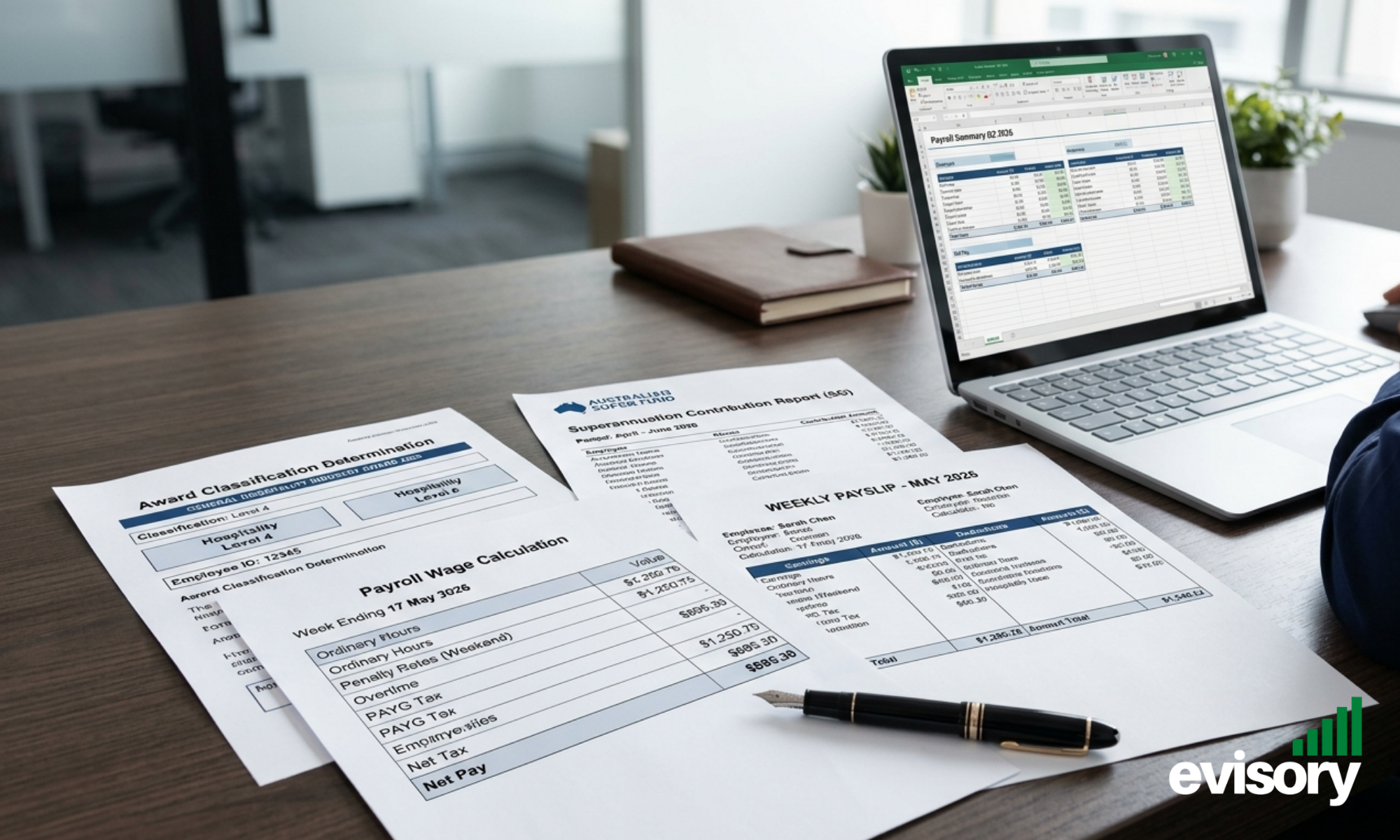
Award interpretation mistakes can create years of financial exposure.
The regulatory environment has changed substantially. The wage theft laws introduced on 1 January 2025 mark the most significant shift in Australian payroll compliance in a generation. For the first time, the legal distinction between accidental underpayment and intentional wage theft is being actively enforced at a criminal level.
Honest mistakes are not criminalised — but repeated errors, failure to remediate, or misclassifications that appear deliberate can lead to prosecution, not just backpay orders. The Fair Work Ombudsman has been granted greater authority to investigate, and hospitality is an explicit priority sector.
What does this look like in practice?
In April 2026, a Melbourne restaurant — Carlucci's in Templestowe — signed an enforceable undertaking with the Fair Work Ombudsman after underpaying 38 employees $194,011 between June 2023 and July 2025. The cause: the operator paid flat rates, believing they were sufficient to cover all entitlements including penalties and overtime. They weren't. The backpay included $173,224 in wages and $20,787 in superannuation. The undertaking requires independent audits, staff training programs, and ongoing FWO reporting — a significant operational burden on top of the financial hit.
In 2024–25, the operators of Sushi Bay outlets were ordered to pay $15.3 million — including court penalties — for deliberately underpaying 163 workers more than $650,000. And surprise inspections across 43 Newcastle food businesses found wage law breaches in 73% of venues, with the most common issue being failure to pay penalty rates.
These are not outliers. They are patterns.
The most common payroll errors in hospitality — and what they actually cost
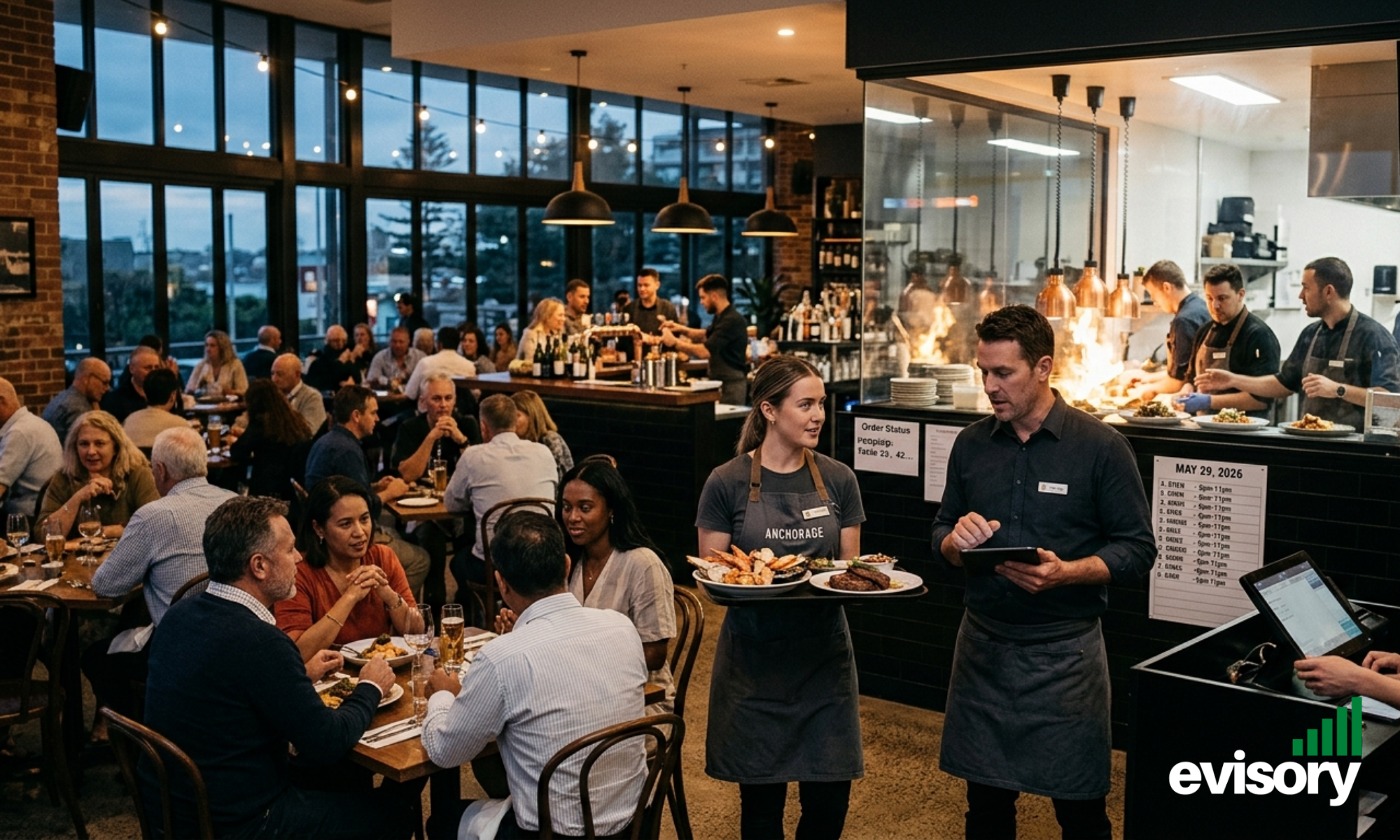
Evening and weekend shifts dramatically affect true labour costs.
1. Paying flat rates that don't cover award entitlements
This is by far the most widespread error in Australian hospitality. An operator agrees to pay a casual employee $28/hr flat and considers that sufficient. But under the Hospitality Industry (General) Award 2020 (MA000009), that employee is entitled to penalty rates on top of the base rate for evening work, weekend work, and public holidays — rates that can reach 150–200% of the ordinary rate. A flat rate that looks generous at first glance can still represent underpayment once penalty loadings are applied.
The Carlucci's case above was almost exactly this scenario. The business thought it was compliant. It wasn't.
2. Misclassifying employee levels
The Hospitality Award has multiple classification levels, each with a different minimum rate. Level 1 food and beverage attendants must receive at least $24.95/hr as of July 2025. Employees performing Level 3 duties but classified at Level 1 are being underpaid — and that underpayment accumulates across every shift they work, going back potentially six years.
3. Overstaffing slow periods by habit
On the financial side, rostering is where the most recoverable money lives. One extra staff member per shift, compounded over weeks and months, adds thousands in unnecessary cost. Consider: a venue doing $50,000 in weekly revenue running at 40% labour cost versus 32% is paying an additional $4,000 in wages per week for the same revenue — that's over $200,000 a year. An unproductive shift can cost up to 50% of earnings on a slow morning, a figure that makes the case for data-driven rostering clearer than almost any other metric.
4. Not accounting for the true cost of superannuation
Super is now at 11.5% and was scheduled to reach 12% from 1 July 2025. Many operators budget for the base wage and treat super as an afterthought. But superannuation is a payroll cost. A staff member on $24.95/hr doesn't cost $24.95/hr — they cost $24.95 plus super, plus casual loading if applicable, plus any applicable allowances. 64% of Australian operators say labour cost control is their top operational concern, yet many aren't calculating the true loaded cost of each shift before they schedule it.
5. Record-keeping failures
Payroll compliance isn't just about paying correctly — it's about being able to prove it. Failure to issue proper payslips, failure to maintain time and wage records, and failure to document shift details are all prosecutable offences under the Fair Work Act. In the Newcastle inspections, eight infringement notices were issued for payslip and record-keeping breaches alone, resulting in $22,497 in fines — entirely separate from any underpayment issue.
The financial maths of rostering done well vs done poorly
Here's a concrete illustration of what poor labour scheduling costs — not as a compliance issue, but as a pure financial one.
Same revenue. Different roster. Dramatically different result:
ScenarioWeekly RevenueLabour %Weekly Labour CostAnnual ImpactRoster by habit$40,00040%$16,000—Roster by forecast$40,00032%$12,800+$166,400/yrOptimal (target)$40,00028%$11,200+$249,600/yr
That $166,400 annual difference between habit-rostering at 40% and forecast-rostering at 32% is not generated by selling more food. It comes entirely from scheduling the right number of people at the right time. For a venue on 5% net margins turning over $2 million, that's the difference between $100,000 profit and $266,000 profit — a transformation, not an incremental improvement.
Even a small improvement in scheduling efficiency can reduce labour costs by 2–5%, which has a direct impact on profit because fixed costs don't change.
Use the Rostering vs Sales Tracker to map your actual labour spend against revenue by day and shift — and see exactly where the gap is.
Why hospitality is particularly exposed
Hospitality's payroll complexity is genuinely significant. Most other industries deal with a relatively fixed workforce on consistent hours. Hospitality deals with:
High volumes of casual staff (each entitled to 25% casual loading)
Complex penalty rate structures (evening, weekend, public holiday rates)
Split shifts and irregular hours
Multiple award classifications across front-of-house, back-of-house, and management
High staff turnover, meaning constant onboarding of new employees at potentially incorrect rates
Seasonal revenue swings that make consistent scheduling harder
Hospitality venues are especially exposed given the industry's reliance on casual and part-time staff and complex award interpretations. The Fair Work Ombudsman's priority focus on the sector reflects this — and the inspections aren't announced.
58% of Australian restaurant operators report difficulty finding qualified staff. Staff turnover in hospitality commonly exceeds 60–70% annually. Every time an employee leaves and a new one starts, there's a risk of an incorrect classification, a rate not updated, or a loading not applied. Without a system that catches these errors automatically, they accumulate.
What good payroll management actually looks like in 2026

Modern hospitality businesses manage payroll with real-time data, not guesswork.
Weekly labour vs revenue reporting. Your labour cost percentage should not be a surprise at month end. It should be visible every week, tracked against forecasted revenue, and reviewed before the next roster is written. A real-time view of labour against sales gives you the ability to act — send a staff member home early on a slow service, avoid scheduling an extra shift that isn't warranted — before the cost is locked in.
Rostering based on data, not intuition. Using historical sales data to predict peak periods and schedule accordingly is the difference between proactive and reactive labour management. A venue that analyses its covers-per-hour, average transaction value by time slot, and kitchen throughput by day can schedule with precision. One that guesses — based on last week or a manager's read of the calendar — can't.
An award classification audit. If you haven't formally reviewed your staff classifications against the Hospitality Industry (General) Award in the last 12 months, do it. The award is complex, it updates annually, and the most common form of underpayment — penalty rate errors and misclassification — can be caught and corrected before they become a Fair Work issue.
Payslip discipline. Every employee, every pay period, without exception. Payslips must include hours worked, rate of pay, gross and net pay, tax withheld, and super contributions. This is not optional and not something to cut corners on.
True loaded cost budgeting. When building a roster, you should be calculating the full cost of each shift: base rate + casual loading (if applicable) + penalty rates for the hours/day in question + super. Not the headline wage rate. Operators who roster based on headline rates consistently underestimate their true labour cost — and end up surprised by the payroll run.
A payroll health checklist for hospitality operators
Compliance fundamentals:
Have you reviewed your staff classifications against the current Hospitality Industry Award?
Are penalty rates for evenings, weekends, and public holidays applied correctly for every employee?
Are casual employees receiving the 25% casual loading on top of their base rate?
Are payslips issued to all staff every pay period, with full details?
Are time and wage records maintained and accessible?
Financial management:
Do you know your labour cost percentage for last week?
Is your roster built from a revenue forecast, or from habit?
Have you calculated the true loaded cost per shift (base + loadings + super) for each employee type?
Is your payroll cost reviewed against sales before the next roster is finalised?
Do you track labour cost by day and shift — or only by week or month?
If you've answered "no" or "unsure" to more than two of these, your payroll system has exposure — both financial and legal.
Access the Payroll Cost Calculator to run your true loaded wage costs, and use the Rostering vs Sales Tracker to map your schedule against your revenue pattern.
The Fair Work Ombudsman's message is clear: paying flat rates and hoping they're high enough is not a compliance strategy. The venues that avoid exposure in 2026 are those that have built systems — not those who are relying on good intent.
Further reading and official resources
Fair Work Ombudsman – Annual Report 2024–25 (record $358M recovered)
Hospitality Magazine – Carlucci's Enforceable Undertaking (April 2026)
Concerned about your payroll exposure?
Evisory works with Australian hospitality operators to review payroll systems, identify compliance gaps, and build labour cost management practices that protect the business — financially and legally.