
Why an EOFY Checklist Is Important for Hospitality Businesses
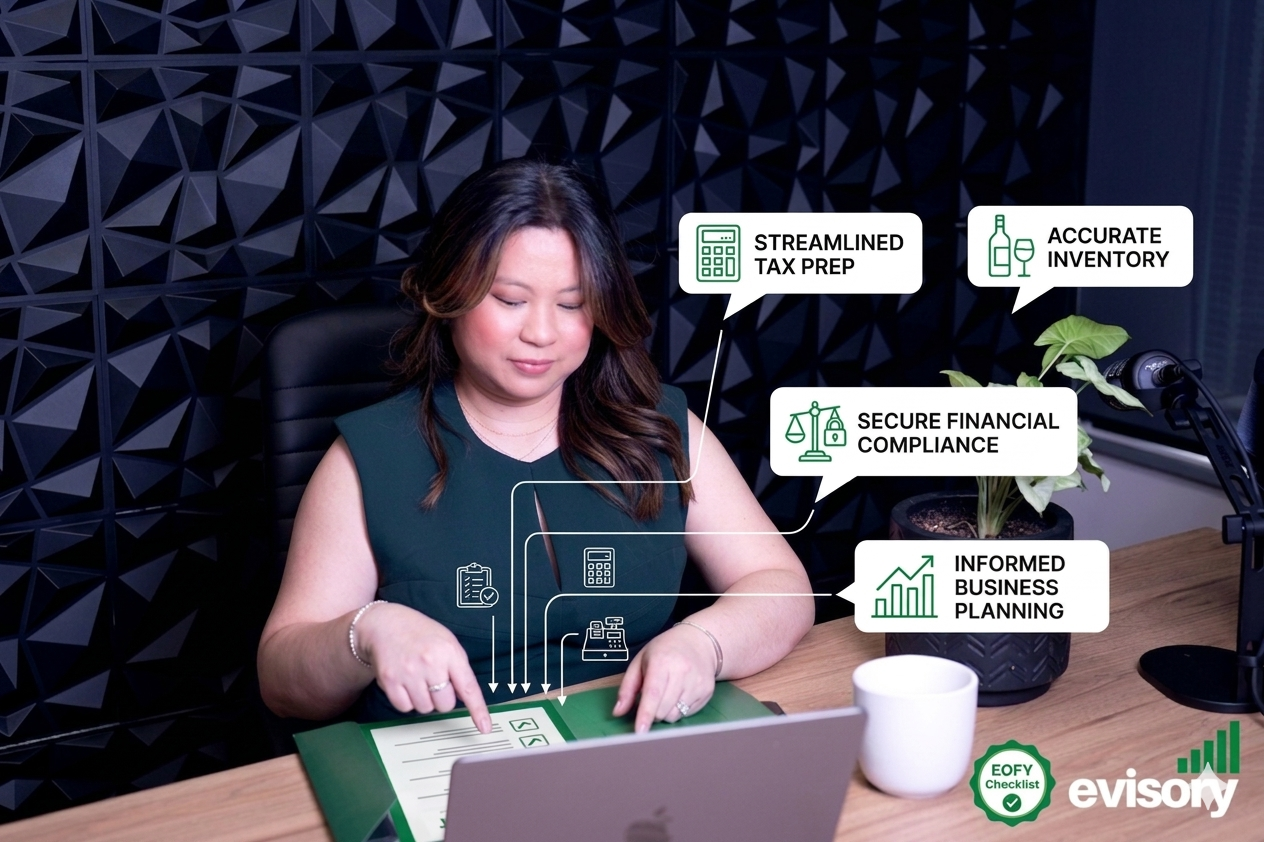
Turn EOFY from a stressful tax deadline into a strategic review of your hospitality business's profitability and compliance.
For many hospitality business owners, the end of financial year (EOFY) arrives as a stressful rush of paperwork, unanswered questions, and last-minute tax planning. But EOFY should be much more than simply lodging a tax return.
For cafés, restaurants, bars, takeaway stores, and hospitality venues, EOFY is one of the best opportunities to review the financial health of your business and prepare properly for the year ahead.
At Evisory, we work with hospitality businesses that deal with tight margins, rising wages, staffing challenges, and increasing compliance obligations every day. And one thing is consistent:
The businesses with organised systems and regular financial reviews are the businesses that perform better long term.
Why EOFY Matters More in Hospitality
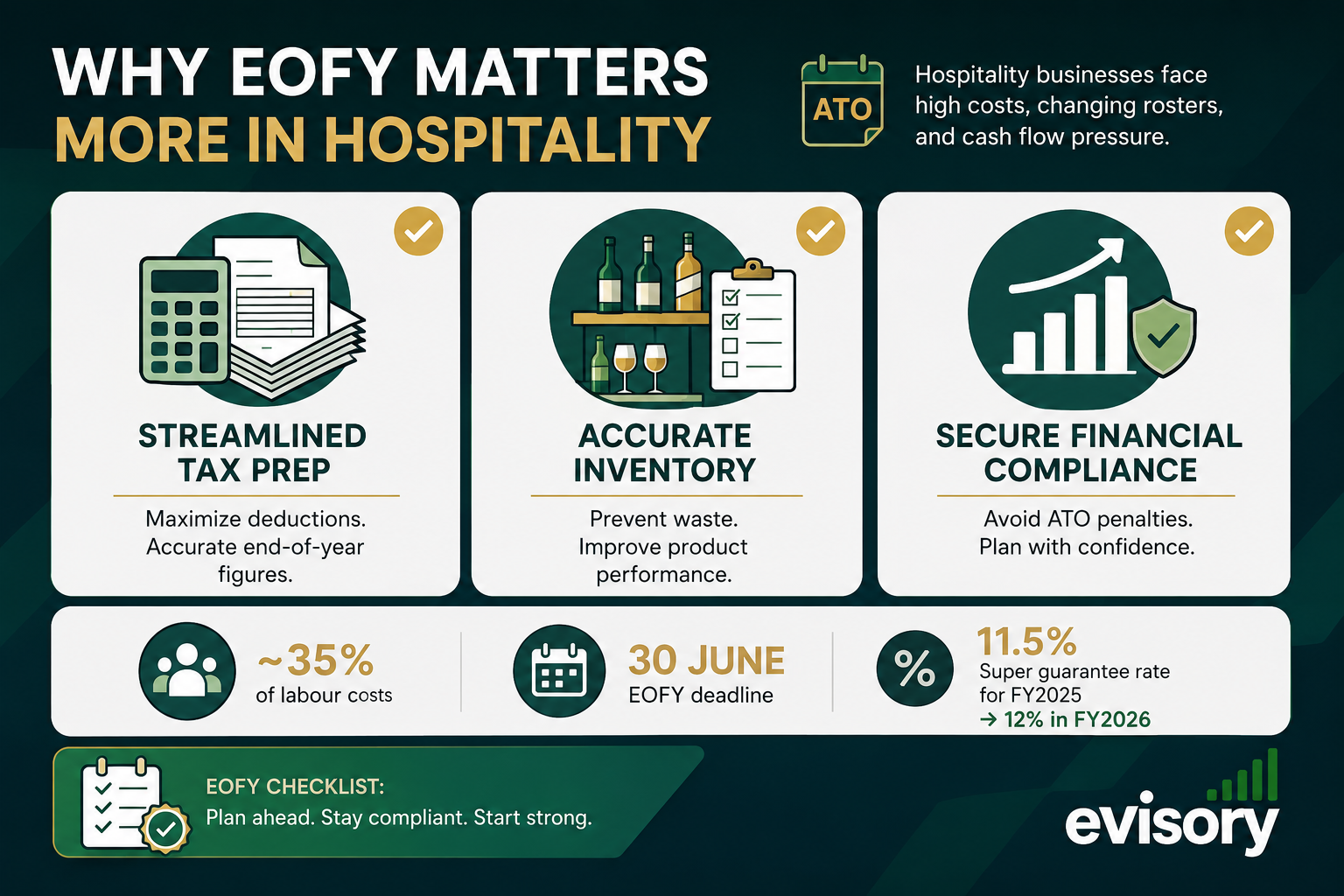
Hospitality Businesses face high costs, changing rosters, and cash flow pressure.
Hospitality businesses operate differently from most other industries. Between high wage costs, changing rosters, casual staffing, rising supplier costs, and constant cash flow pressure, small issues can build up quickly over a year — often without owners realising until it's too late.
Things like payroll errors, poor rostering, incorrect pricing, excessive wastage, unpaid super, or weak bookkeeping systems can quietly erode profitability. According to the ATO, payroll compliance errors are among the most common issues found in small business reviews — and hospitality is a sector that's particularly exposed.
EOFY gives business owners the chance to stop, review the numbers properly, and identify problems before they become bigger issues.
30 June: EOFY deadline — don't leave it to the last week
~35%: Typical labour cost target for hospitality businesses
11.5%: Super guarantee rate for FY2025 — rising to 12% in FY2026
An EOFY Checklist Helps Prevent Costly Mistakes
A structured EOFY checklist ensures important tasks are not missed before 30 June. Without a proper review process, hospitality businesses can accidentally miss deductions, underpay super, overpay tax, overlook compliance issues, or make poor purchasing decisions simply to "save tax." EOFY planning should always focus on improving the business overall — not just reducing a tax bill.
Payroll & Super Changes Are Increasing Pressure on Businesses
With increasing ATO visibility through Single Touch Payroll (STP) and the upcoming Payday Super reforms, accurate payroll systems are becoming more important than ever.
Hospitality businesses are already heavily affected by staff turnover, casual employees, overtime, penalty rates, and Hospitality Industry Award interpretation. This means payroll mistakes can happen easily if systems are not reviewed regularly. An EOFY checklist helps identify these risks early and improve processes before problems escalate.
EOFY Is Also a Chance to Improve Profitability
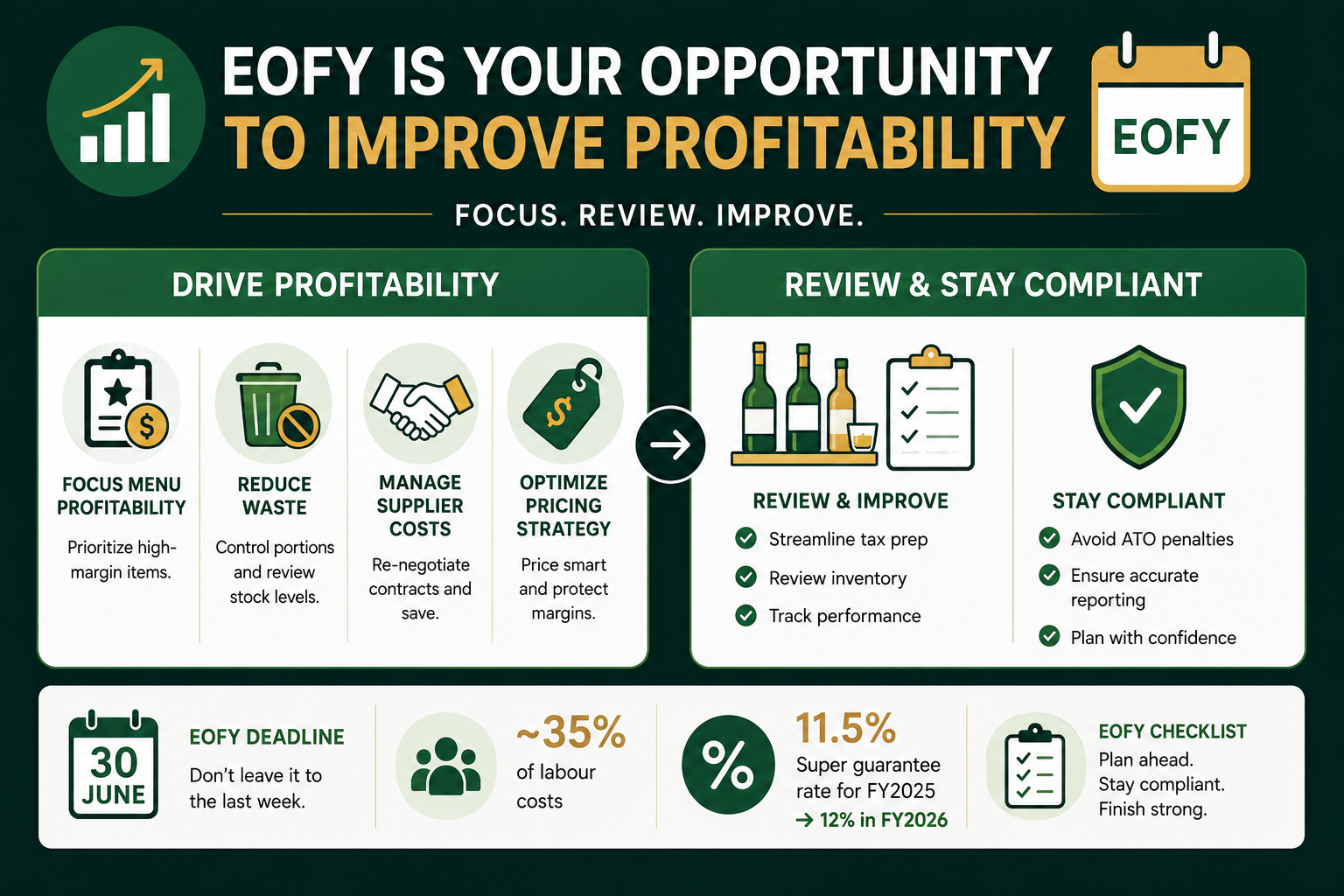
How to improve your profitability through the EOFY
Many hospitality business owners focus heavily on revenue — but higher sales don't always mean higher profits. EOFY is the ideal time to review labour cost percentages, menu profitability, supplier costs, stock wastage, pricing strategy, and overall cash flow management. Often, small operational improvements create significant long-term profit gains.
Good Bookkeeping Makes EOFY Easier
One of the biggest causes of EOFY stress is incomplete or disorganised bookkeeping. Missing receipts, unreconciled bank accounts, incorrect payroll coding, and overdue bookkeeping all make tax planning harder and increase the risk of errors. Clean records throughout the year allow for faster processing, better reporting, and more accurate decision-making.
If you're using Xero, EOFY is a great time to check your bank reconciliation is fully up to date and your chart of accounts is correctly coded — this alone can save hours when your accountant or advisor sits down with your numbers.
EOFY Should Be About Planning Ahead — Not Just Looking Back
A strong EOFY process is not just about reviewing the past financial year. It's also about preparing for the next one. Hospitality businesses that use EOFY strategically can set financial targets, improve systems, strengthen cash flow, review staffing efficiency, and create clearer growth plans. The businesses that treat EOFY as a business review — rather than just a tax deadline — are the ones that build stronger long-term financial stability.
The businesses that perform best financially are not always the busiest. They are typically the ones with strong systems, accurate reporting, controlled labour costs, proactive cash flow management, and regular financial reviews throughout the year.
📋 Download the Full EOFY Checklist
Get the printable PDF version of this checklist to work through with your team or accountant before 30 June — free from Evisory.
Want a hands-on review? Book your complimentary EOFY Review with Evisory →
Evisory provides accounting, bookkeeping, and business advisory services for hospitality businesses across Australia. This article is general in nature and does not constitute financial advice. Please consult a qualified advisor for advice specific to your circumstances.