
10 Hospitality Bookkeeping Mistakes Costing Venues Thousands

Identify and fix the ten most common bookkeeping errors that quietly drain profits from hospitality venues.
Most hospitality venues aren't losing money because trade is slow. They're losing it through bookkeeping errors that go unnoticed for months — sometimes years.
Hospitality bookkeeping is genuinely complex. You're dealing with daily cash and card takings, split tenders, supplier invoices, perishable stock, casual rosters, tips, function deposits, and GST — often across multiple revenue streams, all moving fast.
In that environment, even a well-run venue can accumulate bookkeeping errors that quietly erode the bottom line. The problem isn't usually incompetence — it's that no one has ever sat down and done a proper health check on the numbers.
According to the ATO's small business record-keeping guidelines, poor bookkeeping is one of the most common triggers for audit activity in hospitality — and one of the most preventable. Here are the ten mistakes we see most often, and what each one costs.

1 Not reconciling the POS to the bank daily
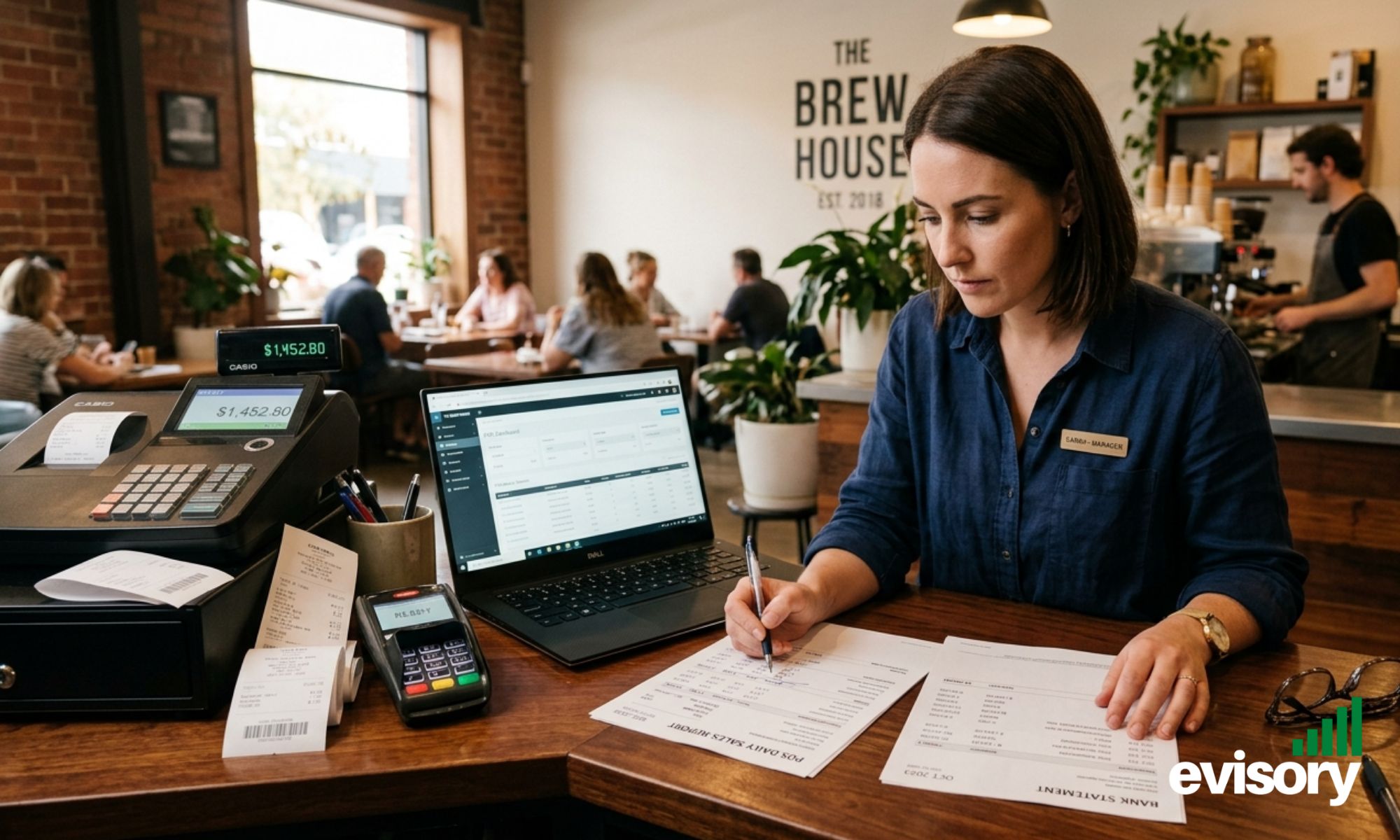
Daily POS reconciliation helps hospitality venues detect costly discrepancies early.
High risk
Your POS system and your bank account should tell the same story every day. When they don't — and they often don't — the gap is either unrecorded voids, float discrepancies, surcharge mismatches, or outright cash handling errors. Left unresolved, these compound fast. A $30 daily discrepancy is over $10,000 a year.
Fix: Reconcile POS takings to bank deposits every single trading day. Use your Xero bank reconciliation or equivalent to make this a sub-5-minute daily task.
2 Miscoding expenses to the wrong accounts
High risk
When cleaning supplies get coded to food cost, or repairs get coded to equipment purchases, your P&L becomes meaningless. You can't benchmark food cost percentage accurately if non-food costs are buried inside it. Over time this distorts every financial decision you make — from menu pricing to staffing levels.
Fix: Build a clear, hospitality-specific chart of accounts from the start. The ATO's business deductions guide outlines which categories matter for tax too.
3 Claiming GST on non-GST items
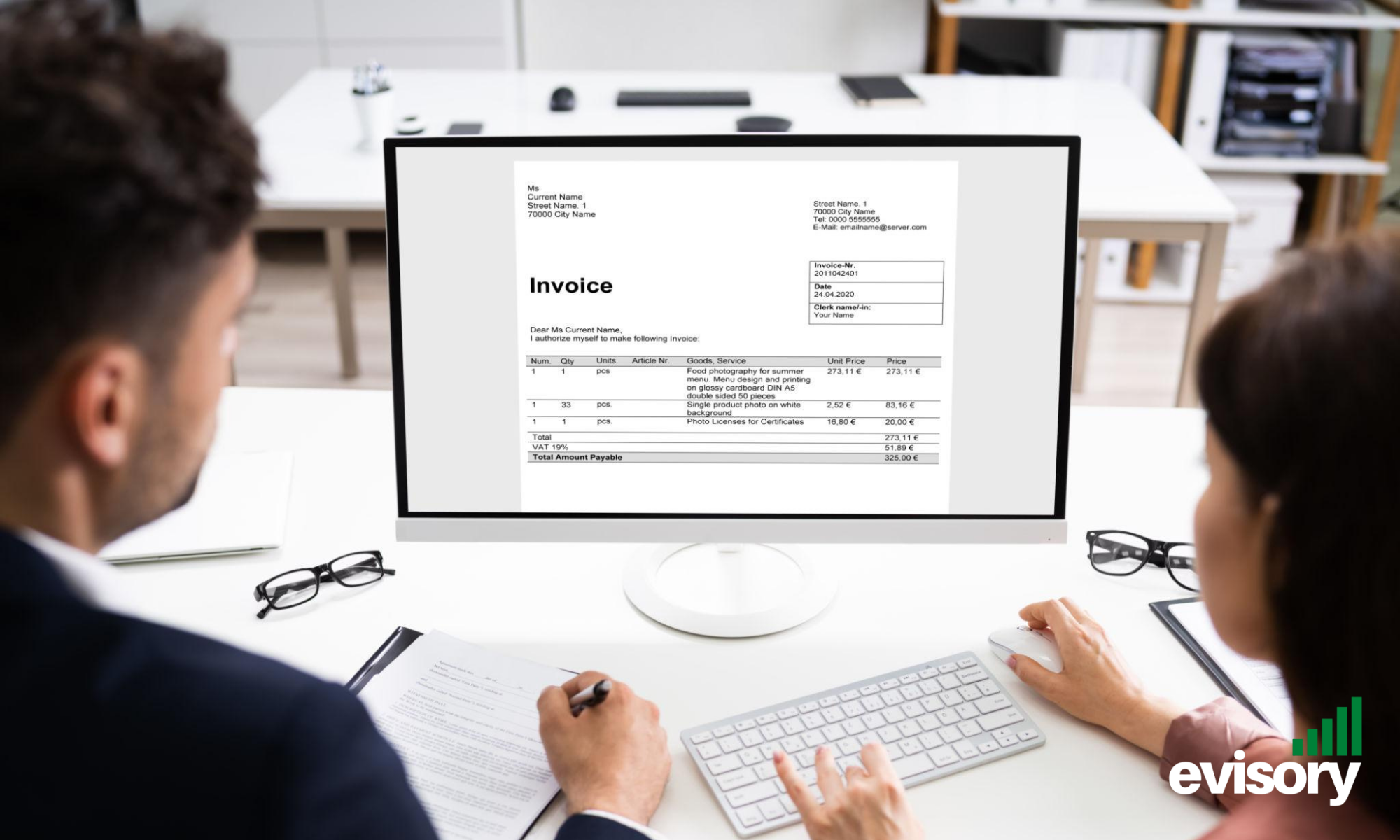
Incorrect GST coding is one of the most common hospitality bookkeeping mistakes.
Compliance risk
Not every purchase a venue makes carries GST — fresh food, some beverages, and certain supplier invoices are GST-free or input-taxed. Incorrectly claiming GST credits on these, or missing legitimate credits elsewhere, means you're either over-claiming (ATO liability) or under-claiming (leaving money on the table). Both are costly.
Fix: Review your GST food classifications on the ATO website and set up tax codes in your accounting software to match.
4 Undercounting labour costs
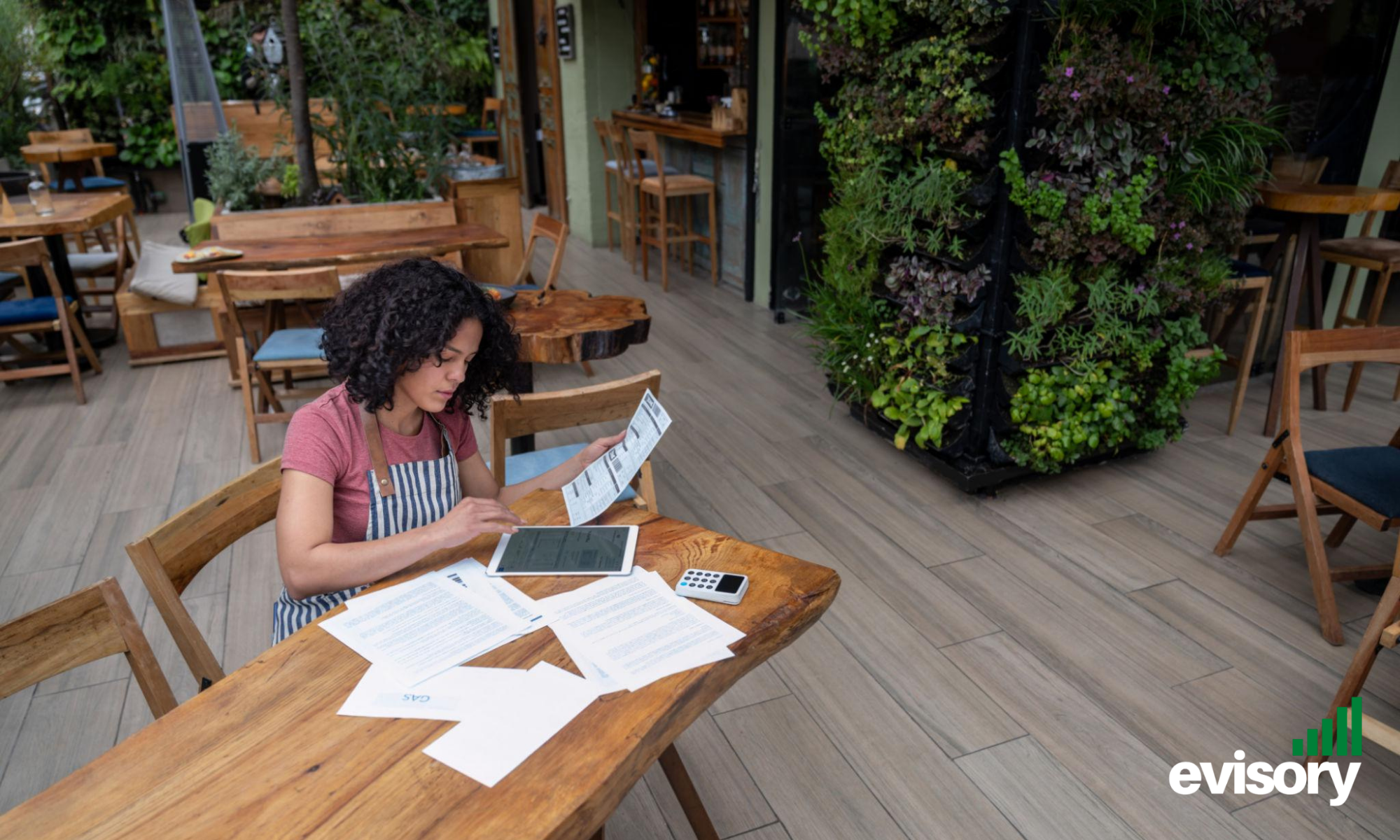
Labour costs should include wages, superannuation, and employment on-costs.
High risk
Many venues calculate wages from their payroll system but forget to add superannuation, workers' compensation premiums, payroll tax (where applicable), and casual loading on top. This understates your true labour cost by 15–20%, making your prime cost ratio look healthier than it is — and your decisions based on it quietly wrong.
Fix: Use total employment cost — wages + super + on-costs — in every labour calculation. Check Fair Work's hospitality award to ensure award compliance is also built into your modelling.
Recognising any of these? Our free Bookkeeping Health Check Template walks you through every area — download it below or keep reading.
5 Not doing a weekly stock take
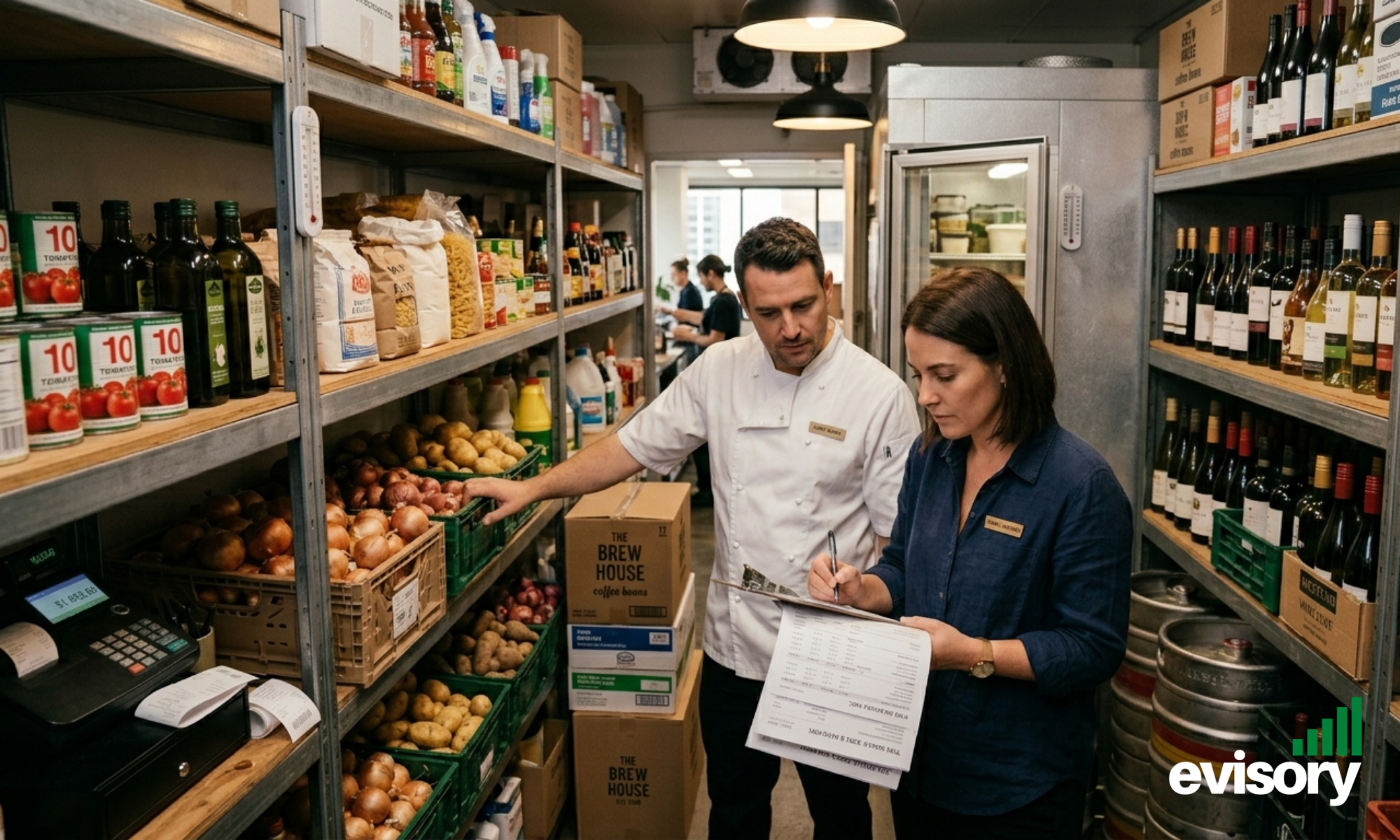
Regular stock takes help hospitality venues reduce waste and protect margins.
Medium risk
Without a weekly stock count, your COGS figure is an estimate — and often a generous one. Variance between theoretical and actual usage covers up waste, theft, over-portioning, and supplier short-delivery. You can't manage food cost percentage accurately if you don't know what you actually used.
Fix: A weekly stock take doesn't need to be exhaustive — a structured count of your top 20 highest-cost items covers most of the variance. Inventory tools like MarketMan or Lightspeed automate much of this.
6 Mixing personal and business expenses
Compliance risk
Running a personal expense through the business account — or vice versa — is one of the most common small business bookkeeping errors, and one of the most scrutinised by the ATO. Beyond the compliance risk, it makes your P&L unreliable and your tax position difficult to defend.
Fix: Separate business and personal accounts completely. If the owner needs to draw funds, process it as a formal owner's draw or director's salary — not a miscellaneous expense. The ATO's guidance on private use of business funds is worth reading.
7 Not accruing for BAS and super liabilities
Cash flow risk
Quarterly BAS and superannuation payments are predictable obligations — yet they blindside cash flow for venues that don't accrue for them weekly. When a $28,000 BAS bill arrives and the working capital isn't there, it forces rushed decisions: deferring supplier payments, drawing on credit lines, or missing the due date entirely.
Fix: Set aside GST collected and super owing every week into a dedicated holding account or sub-account. Treat tax liabilities as money that was never yours to spend. The ATO's super payment schedule outlines key due dates.
8 Treating function deposits as income on receipt
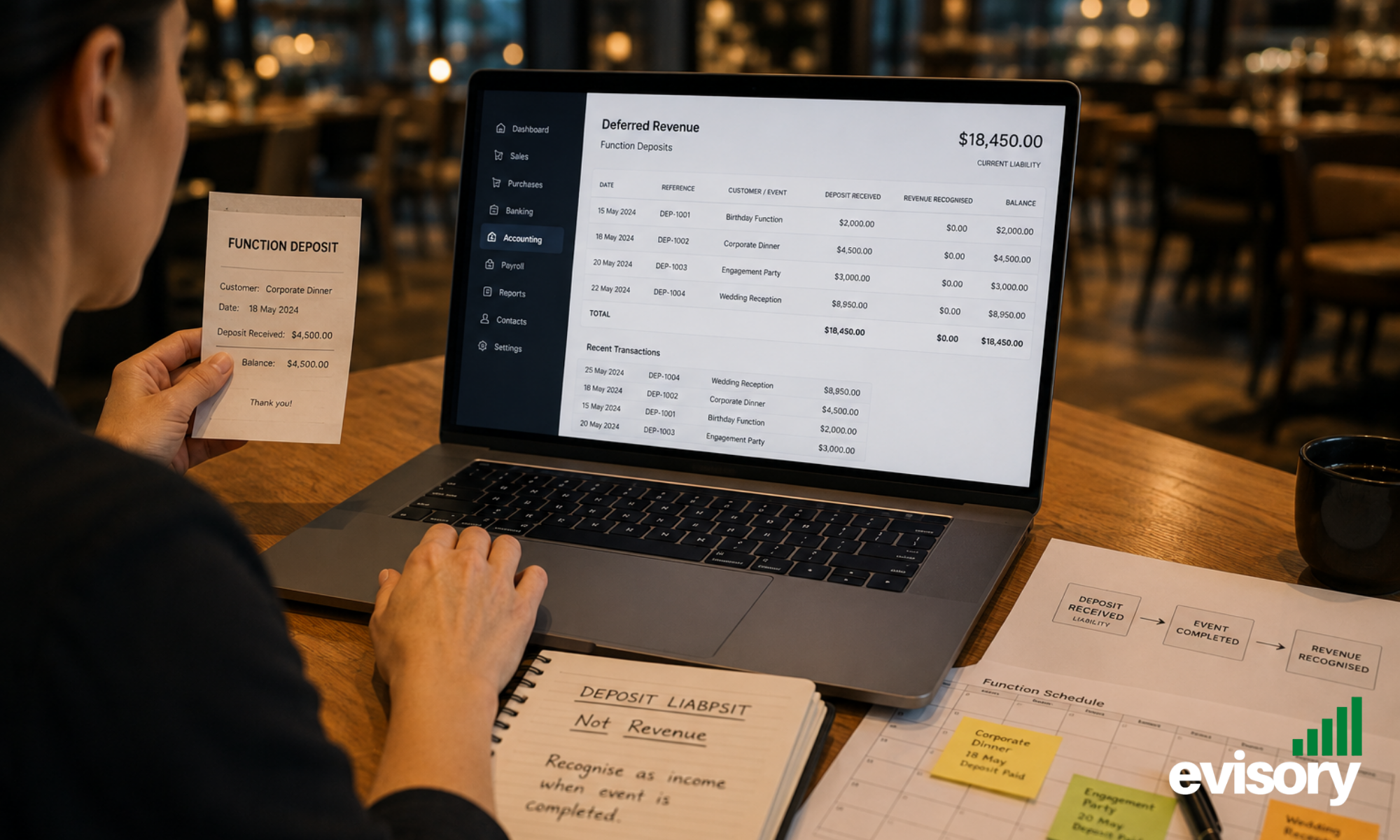
Function deposits should be recorded as deferred revenue until the event is delivered.
Medium risk
A function deposit isn't revenue — it's a liability until the event is delivered. Recording it as income when it hits the bank overstates revenue for that period and creates a GST obligation before the service has been rendered. When functions get cancelled, the resulting refund then appears as a "cost" — distorting both periods.
Fix: Record deposits as deferred revenue (a liability) and recognise income only when the event is completed. Your accounting software should handle this with the correct account type — check Xero's deferred revenue setup guide if you're unsure.
9 No separation between food and beverage revenue
Medium risk
Lumping food and beverage into a single revenue line hides critical insight. Beverage typically carries a much higher margin than food — so a venue that's shifting its mix toward food without realising it may watch its overall margin shrink while revenue holds steady. You need to know which revenue stream is doing the work.
Fix: Configure your POS and accounting system to split food, beverage, and any other revenue streams (functions, merchandise, etc.) from day one. Most modern POS systems including Lightspeed and Square for Restaurants support this natively.
10 Leaving bookkeeping until end of month — or later
High risk
This is the root cause of most of the above. When bookkeeping is treated as a monthly or quarterly catch-up exercise rather than a weekly operational habit, errors accumulate, decisions are made on bad data, and by the time anything surfaces in the P&L, it's already cost you. Monthly reporting is for tax compliance. Weekly visibility is for running the business.
Fix: Commit to a weekly bookkeeping rhythm — even if it's just 30 minutes. Use our free Weekly Reconciliation Checklist below to make it systematic and consistent every time.

Regular bookkeeping reviews help venues identify hidden financial risks early.
How many of these are affecting your venue right now?
The honest answer for most venues is: several. Not because the owners aren't across their business — but because hospitality bookkeeping requires specific systems, and most venues set things up quickly under pressure and never revisit them.
A bookkeeping health check doesn't need to take long. It just needs to happen. The Australian Government's bookkeeping guide is a solid starting point, but the two templates below are built specifically for hospitality — covering every area listed above in a structured, actionable format.
Good to know
The ATO's record-keeping requirements for small business state that all financial records must be kept for five years. Poor bookkeeping doesn't just cost you now — it creates liability later.
Free downloads — fix your bookkeeping this week
We have practical tools to audit your current setup and build a consistent weekly routine from scratch.
If your bookkeeping needs more than a computation fix, Evisory works with hospitality venues on clean-ups, ongoing bookkeeping, and systems that actually keep pace with your operation. Talk to the team →