
How Hospitality Businesses Can Improve Cash Flow Without Increasing Sales
Updated May 2026 · 9 min read · Evisory Hospitality Advisory
📥 Free tools:
Here's a scenario most hospitality operators have lived: the dining room is full, the weekend was strong, bookings are solid — and yet there's still tension around making payroll or covering the next supplier run. That disconnect between healthy trading and tight cash is one of the most common and least-talked-about problems in the industry.
The truth is, cash flow is an operational discipline, not just an accounting process. Even profitable venues can find themselves scrambling to cover expenses if the timing of money in and money out isn't managed deliberately. And in 2026 — with higher wage costs, rising superannuation obligations, and increased operating expenses continuing to compress margins — the window for error has gotten smaller.
The good news: you don't need to serve more covers to fix a cash flow problem. You need to fix when and how money moves through your business. This post covers the practical levers that make the biggest difference.

Master the operational levers—from supplier terms to payroll timing—that protect your hospitality venue's cash flow.
Why hospitality cash flow problems look different from other industries
Most businesses have a gap between when they spend money and when they collect it. In hospitality, that gap is unusually tight — and moves in multiple directions at once.
The core tension is timing: suppliers often want weekly or fortnightly payment, wages run on fixed cycles, and rent falls monthly — while revenue swings daily based on foot traffic, weather, events, and season. Even when overall sales are healthy, those mismatches create pressure.
The five most common cash flow culprits in hospitality are:
Payroll timing that works against you. If your payroll run hits on Thursday but your strongest revenue days are Friday through Sunday, you're funding wages before collecting the cash to cover them.
Supplier terms you haven't questioned. Most operators accept whatever payment terms a supplier sets at signup and never revisit them — even after years of reliable payment history.
Inventory tied up in the cool room. Over-ordering locks cash in perishable stock. Every dollar sitting in a freezer is a dollar not available for bills.
Third-party delivery commissions. Platforms typically charge 25–35% per order and pay out weekly or fortnightly — a meaningful float on what can be a large chunk of revenue.
No forward visibility. Without a weekly cash flow forecast, most operators are reacting to problems rather than anticipating them. By the time the gap is visible in the bank account, the options are limited.
Cash flow problems rarely announce themselves with advance notice. By the time a venue feels the pressure, the decision that caused it was usually made four to six weeks earlier — a purchase order, a roster, a supplier invoice approved without checking the calendar.
Fix 1: Renegotiate your supplier payment terms

Improving supplier payment terms can immediately ease hospitality cash flow pressure.
This is the highest-impact, lowest-effort lever most venues never pull. Negotiating longer payment terms with suppliers — for example, moving from weekly to fortnightly, or from Net 15 to Net 30 — keeps cash in the business longer without changing your sales volume at all.
The conversation is easier than most operators expect. If you've been a reliable, consistent payer, suppliers have a strong incentive to keep you. Framing the request around aligning payment timing with your revenue cycle — rather than asking for favours — tends to land well. "Our busiest trading days are Friday through Sunday. Could we align our payment run to Tuesdays so we've collected the weekend revenue first?" is a reasonable ask.
Consolidating suppliers also helps. Fewer accounts means better bargaining power and fewer payment dates to manage — which reduces the risk of a timing clash.
What to do this week: Pull your three most significant supplier accounts. Check your current payment terms. Note when those payments fall relative to your revenue days. If there's a mismatch, contact your rep.
Fix 2: Align your payroll cycle with your revenue pattern

Aligning payroll timing with revenue patterns improves hospitality cash flow stability.
If payroll goes out on Thursday but your best revenue days are Friday through Sunday, that timing creates unnecessary strain — you're spending before you've earned. Shifting your pay cycle to later in the week (or to a Monday or Tuesday run that captures weekend receipts) can meaningfully ease pressure without costing anything.
This isn't always possible — some award obligations and employee preferences constrain flexibility. But even a one or two day shift in payroll timing can make a material difference to weekly cash position. It's worth modelling before dismissing.
Use the Wage Forecast Calculator to map your current payroll timing against your revenue curve and see where the gap is
Fix 3: Stop over-ordering inventory
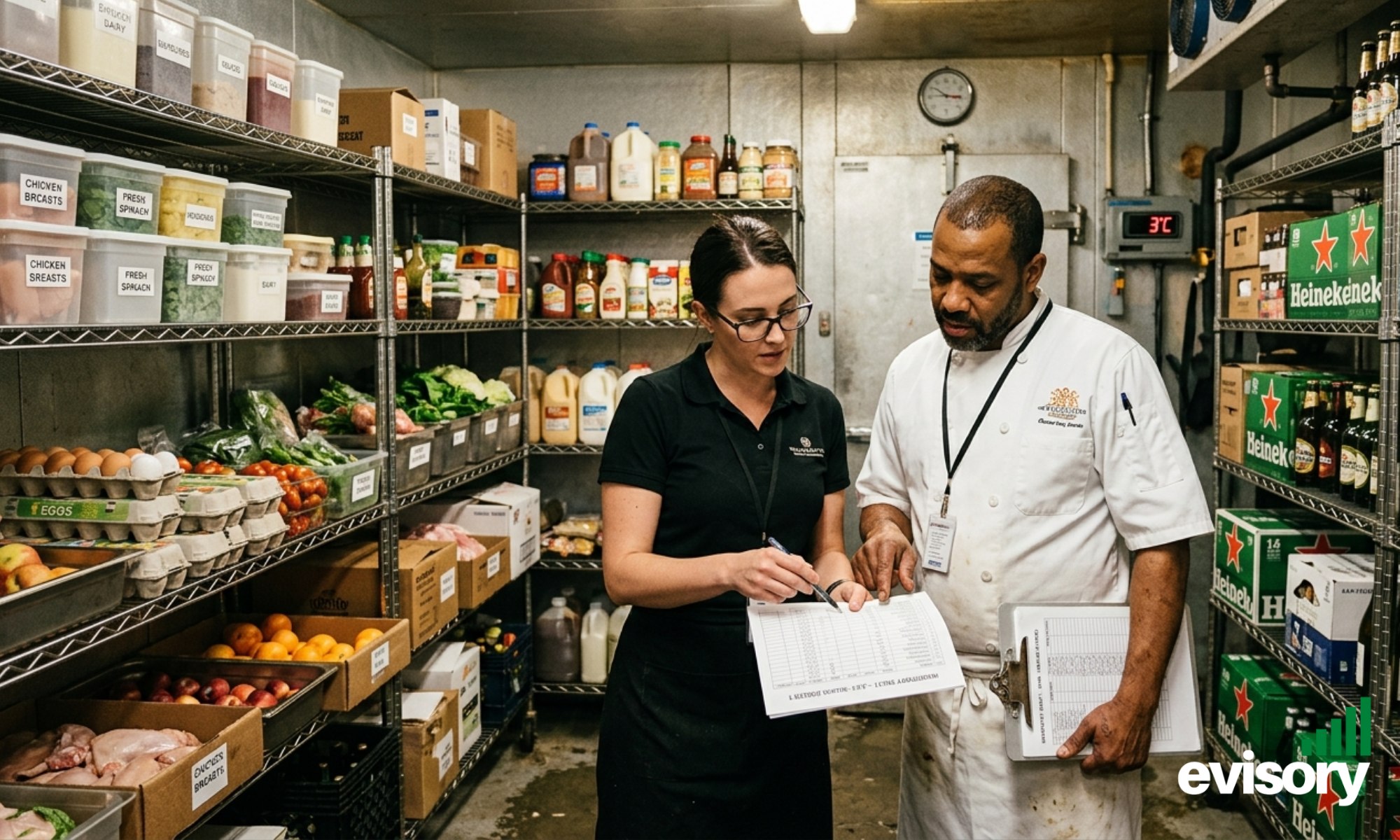
Over-ordering inventory ties up cash that could be used for operational expenses.
Over-ordering quietly drains cash. Perishable stock that doesn't move is money that went out and will never come back. The discipline of just-in-time ordering — buying closer to actual demand rather than to comfort — frees up working capital that can be redirected to cover wages, rent, or bills.
Tracking ingredient usage against sales is the foundation. When you know which items move fast and which sit too long, you can right-size your orders. Restaurants that align purchasing with real demand rather than habit or approximation can free up thousands of dollars in working capital that was previously locked in the storeroom.
Practically, this means:
Ordering based on a forecast week, not a standard template
Running a weekly stocktake on high-value ingredients (protein, seafood, dairy)
Flagging any item with more than five days of inventory on hand
Reviewing portion sizes on slow-moving high-cost dishes
Fix 4: Build a 13-week rolling cash flow forecast

A rolling cash flow forecast helps venues identify financial gaps before they happen.
Most operators manage cash flow reactively — they look at the bank balance, decide whether it feels okay, and move on. A 13-week rolling forecast changes that entirely.
A weekly cash flow tracker — either a spreadsheet or accounting dashboard — gives you real-time visibility over expected revenue, upcoming expenses, and current cash on hand. More importantly, it lets you see problems three or four weeks before they arrive, when you still have options: renegotiate a payment, hold an order, adjust a roster, or arrange a short-term facility.
The 13-week window is deliberate. Short enough to be based on real data rather than guesswork; long enough to catch seasonal dips, tax obligations, and large equipment invoices before they land as surprises.
According to research cited by Aberdeen and IBM, rolling forecasts improve accuracy by around 14% compared to static models — a meaningful improvement for a business operating on 3–6% net margins.
Download the Cashflow Forecast Spreadsheet to get a pre-built 13-week template set up for hospitality cash patterns.
Fix 5: Review how third-party delivery platforms affect your cash timing
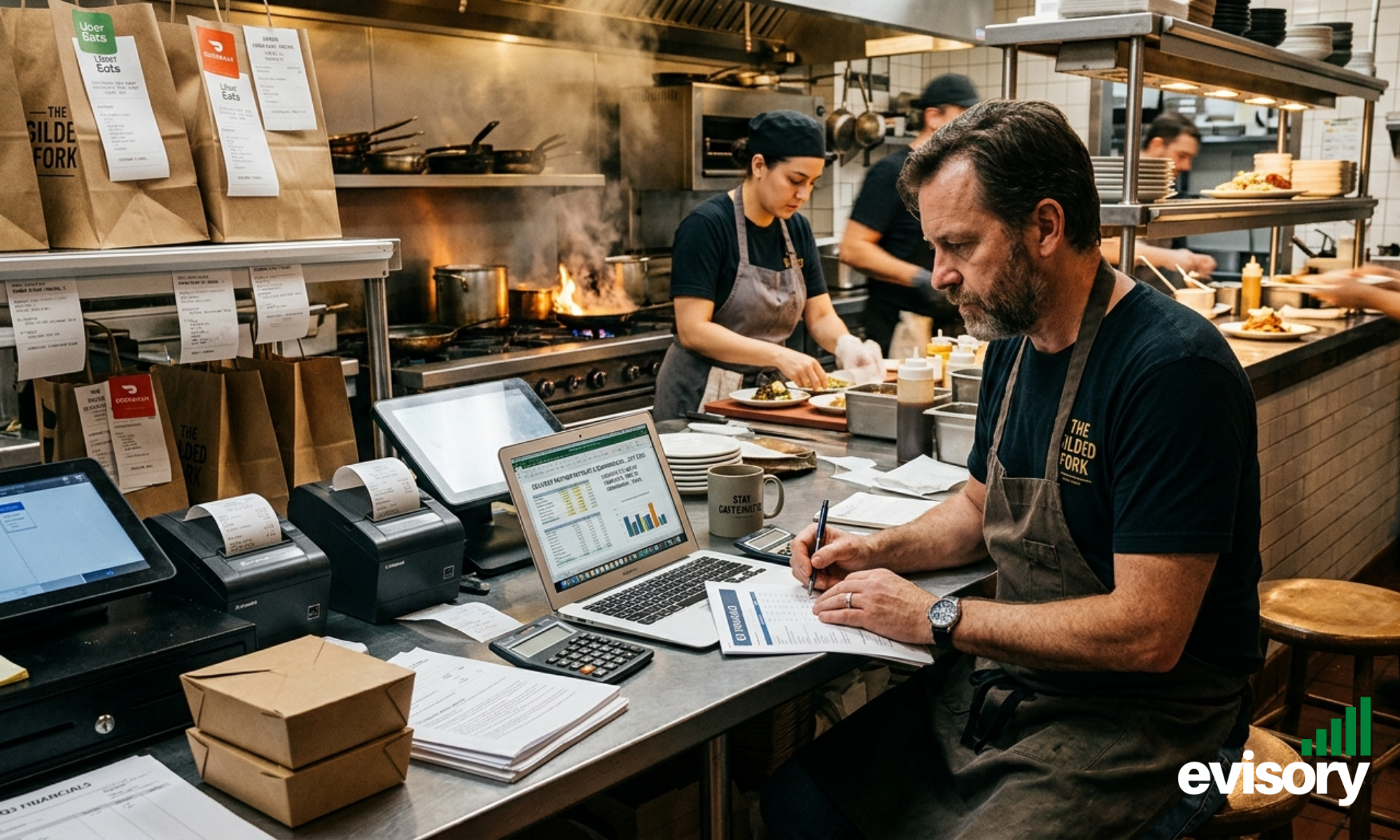
Delivery platform payout delays can create hidden cash flow pressure for venues.
If delivery and takeaway represent a significant portion of your revenue — and for many urban Australian venues, that's 20–40% of total sales — the payout timing of those platforms matters.
Most major platforms settle weekly or fortnightly. That means you're cooking and delivering food today, paying the labour and food cost today, and waiting up to 14 days to receive the revenue. Commissions typically run 25–35% per order, which means the net cash received per delivery order is already compressed — and delayed.
The question isn't whether to use platforms (for most venues, they're a necessary channel). It's whether you're accounting for that timing gap in your cash plan. Venues that budget as if delivery revenue arrives instantly are often surprised when the weekly bank balance doesn't reflect trading.
Two practical responses: build the payout delay into your forecast, and consider whether your direct ordering channel can take a larger share of the volume — where you're paid immediately and keep the margin.
Fix 6: Get on top of your BAS and super timing
GST and superannuation obligations are some of the most predictable cash outflows a hospitality business has — and some of the most commonly underplanned for. BAS quarters fall at fixed intervals. Super is due quarterly. Neither changes.
Yet many operators treat these as surprises. Holding a GST reserve — setting aside the GST component of each week's sales into a separate account as you go — removes the quarterly shock entirely. The same logic applies to super: accruing it weekly as a cost, rather than finding it when the obligation falls due.
Higher superannuation obligations are already contributing to cash pressure for SMEs in 2026. The Super Guarantee rate is at 11.5% and scheduled to reach 12% in July 2025. Building this into your weekly wage forecast — rather than treating it as a quarterly line item — gives a more accurate picture of your true labour cost in real time.
Fix 7: Pressure-test your menu for margin and cash speed

Menu engineering helps hospitality businesses improve margins and cash generation.
Not all revenue is created equal from a cash flow perspective. A dish with a long prep time, high-cost ingredients, and slow table turnover generates less cash per labour hour than a simpler, faster, higher-margin item — even if the menu price is similar.
Menu engineering — analysing each dish's profitability and popularity — is one of the fastest ways to improve cash flow without raising prices across the board. Promoting high-margin items through menu placement, staff recommendations, and specials boards shifts the revenue mix without requiring more covers.
A practical starting point: identify your five highest-margin items and your five lowest. Ask whether menu placement, portion size, or pricing is working for or against you on each. Even a 2–3 percentage point improvement in gross margin flows almost entirely to cash, because the fixed costs don't change.

Hospitality cash flow systems give venue owners greater operational confidence.
Putting it together: a cash flow action checklist
This week:
Pull your last four weeks of bank statements and map outflows against revenue days
Identify the two or three biggest timing mismatches
Contact your top supplier about extending payment terms
This month:
Set up a 13-week cash flow forecast (download the template here)
Review your payroll cycle against your revenue pattern
Run a stocktake on your top 10 ingredients and right-size your next order
This quarter:
Set up a GST reserve account if you don't have one
Audit your delivery platform payout timing and build it into your forecast
Model the impact of a menu mix shift using your POS data
The difference between venues that feel cash-poor and those that feel comfortable often isn't revenue volume. It's whether the operator knows, three weeks in advance, what the cash position will be — and has the systems to act on that information. The tools exist. Most venues just haven't built the habit yet.
Further reading
TapTouch POS – How to Solve Cash Flow Challenges in Restaurants
InvoiceInterchange AU – Late Payments and SME Cash Flow 2026
Napolitano Accounting – Improve Restaurant Cash Flow Management
Ready to get ahead of your cash flow?
If you're a hospitality operator who's tired of managing cash reactively, Evisory works with venues to build forecasting systems, fix cost timing, and create financial clarity.